
How to Design a Website for a Portfolio in 2026: Trends, Tools & Best Practices
April 27, 2026
What Are the Latest Trends in Search Bar Design for 2026?
April 27, 2026How to Design a Website for the Metaverse in 2026: A Complete Guide
Introduction
The metaverse is no longer a futuristic concept—it is rapidly becoming a digital reality. By 2026, the metaverse will be a fully immersive, interconnected virtual space where users work, socialize, and shop. For businesses, having a website that seamlessly bridges the traditional web and the metaverse is essential. This article explains how to design a website for the metaverse in 2026, covering technical requirements, user experience, and future-proof strategies. Whether you are a developer, designer, or business owner, this guide will help you create a metaverse-ready website that stands out.
Understanding the Metaverse Web in 2026
Before diving into design, it is crucial to understand what the metaverse web entails. In 2026, the metaverse is not a single platform but a collection of interconnected virtual worlds, augmented reality overlays, and persistent digital spaces. A metaverse website must be accessible via VR headsets, AR glasses, and traditional screens, offering a consistent experience across devices.
Key Characteristics of Metaverse Websites
- 3D Immersion: Websites are no longer flat; they include 3D environments, interactive objects, and spatial audio.
- Interoperability: Users can move assets, avatars, and data between different metaverse platforms.
- Real-Time Interaction: Multi-user experiences with live collaboration and events.
- Blockchain Integration: Ownership of digital goods via NFTs and smart contracts.
Core Technologies for Metaverse Web Design
Designing a website for the metaverse requires a stack of modern technologies. Here are the essential building blocks:
WebXR and 3D Rendering
WebXR (Extended Reality) is the standard for creating immersive experiences directly in the browser. Combined with WebGL and WebGPU, you can render high-quality 3D graphics without plugins. In 2026, libraries like Three.js, Babylon.js, and A-Frame are mature and widely used.
Blockchain and NFTs
To enable digital ownership, integrate blockchain wallets (e.g., MetaMask, WalletConnect) and NFT minting/display. Smart contracts allow users to buy, sell, and trade virtual goods securely.
Decentralized Storage
Use IPFS or Arweave for storing assets and metadata, ensuring censorship resistance and permanence. This is critical for metaverse websites that rely on user-generated content.
Design Principles for Metaverse Websites
User experience in the metaverse differs from traditional web design. Here are key principles to follow:
Intuitive Navigation in 3D Space
Users should be able to move effortlessly through your virtual space. Implement teleportation, joystick controls, and gaze-based interactions. Provide clear visual cues and minimaps.
Consistent Branding Across Realities
Your brand identity must translate into 3D. Use consistent colors, logos, and typography, but adapt them for spatial environments. For example, 3D text should be readable from multiple angles.
Accessibility and Inclusivity
Not all users have VR headsets. Ensure your website works on desktop and mobile. Offer alternative navigation for users with disabilities, such as voice commands or simplified interfaces.
Step-by-Step Guide to Designing a Metaverse Website
Follow these steps to create a website that is ready for the metaverse in 2026.
1. Define Your Metaverse Strategy
Decide what role your website will play. Will it be a virtual store, a social hub, a gallery, or a hybrid? Identify your target audience and their preferred devices (VR, AR, desktop).
2. Choose the Right Framework
Select a framework that supports WebXR and 3D. Popular options include:
- React Three Fiber: For React developers who want to build 3D scenes declaratively.
- Unity WebGL: If you need advanced physics and high-fidelity graphics.
- Mozilla Hubs: For social VR rooms with minimal coding.
3. Design the 3D Environment
Create a 3D scene that reflects your brand. Use tools like Blender or SketchUp for modeling, and optimize assets for web performance (low polygon count, compressed textures).
4. Implement User Interaction
Add interactive elements such as clickable objects, portals, and NPCs. Use event listeners for VR controllers and hand tracking. Ensure interactions are intuitive.
5. Integrate Blockchain Features
Connect a crypto wallet to authenticate users and enable transactions. Display NFTs in 3D galleries. Consider using Layer 2 solutions for low gas fees.
6. Optimize for Performance
Metaverse websites demand high performance. Use LOD (Level of Detail) models, lazy loading, and efficient shaders. Test on low-end devices to ensure smooth frame rates.
7. Test Across Devices
Test your website on VR headsets (Oculus Quest, HTC Vive), AR glasses (Microsoft HoloLens), and standard browsers. Use emulators and real devices.
SEO for Metaverse Websites
Search engines are evolving to index 3D content. To rank well, follow these SEO best practices:
Structured Data for 3D Objects
Use schema markup for 3D models (e.g., Schema.org/3DModel). This helps search engines understand and display your content in rich results.
Optimize for Voice and Visual Search
With the rise of AR glasses, voice and visual search will dominate. Use natural language in your content and add alt text to 3D assets.
Build Backlinks from Metaverse Communities
Get links from VR forums, blockchain blogs, and tech publications. Guest post on sites that discuss how to design a website for the metaverse in 2026 to establish authority.
Future Trends to Watch
By 2026, several trends will shape metaverse web design:
- AI-Generated Worlds: AI will assist in creating personalized environments.
- Haptic Feedback: Websites will integrate touch sensations via gloves or vests.
- Decentralized Identity: Users will log in with self-sovereign identities (DIDs).
- Real-Time Collaboration: Multi-user editing and events will become standard.
Conclusion
Designing a website for the metaverse in 2026 requires a blend of 3D design, blockchain integration, and user-centric thinking. By embracing WebXR, optimizing for performance, and focusing on interoperability, you can create a site that not only attracts visitors but also immerses them in your brand. Remember that the metaverse is still evolving, so stay flexible and keep learning. Now is the time to start experimenting with how to design a website for the metaverse in 2026—your future audience is waiting.
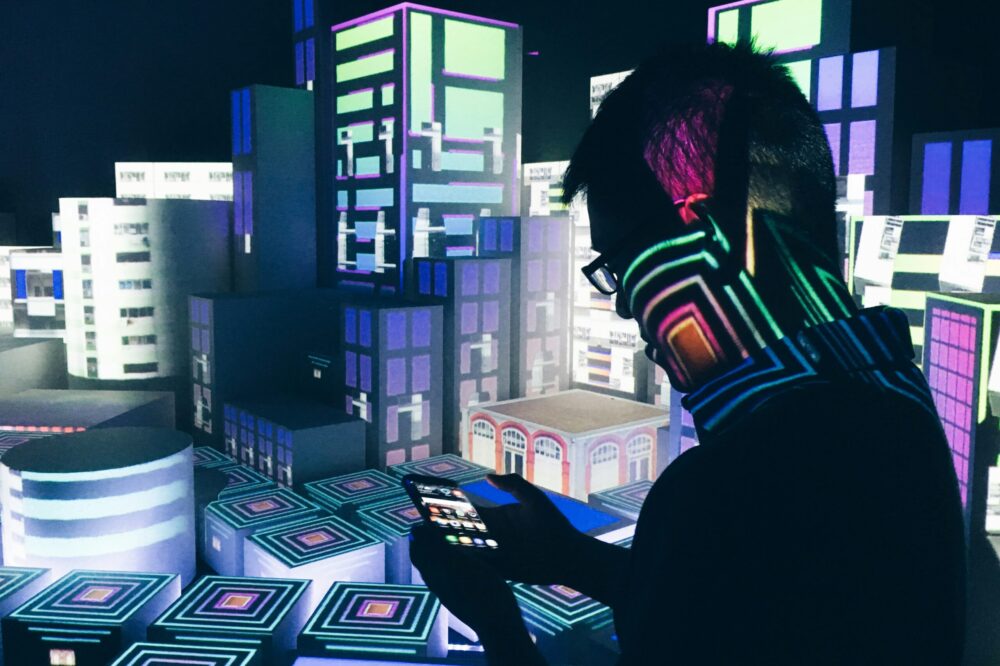
Photo by Kelvin Han on Unsplash