How to Design for Dark Mode vs Light Mode in 2026: A Complete Guide
April 29, 2026
What Is On-Page SEO and How to Do It for a Melbourne Website?
April 29, 2026What Is the Role of Motion Design in Web Design 2026?
Introduction
As we look toward 2026, the role of motion design in web design is no longer just about aesthetic flair—it is a fundamental component of user experience (UX) and interface functionality. Motion design, which encompasses animations, transitions, micro-interactions, and dynamic visual feedback, has matured from a decorative afterthought into a strategic tool that guides users, communicates brand personality, and enhances usability. In this article, we explore what is the role of motion design in web design 2026, examining key trends, best practices, and the impact of emerging technologies like AI and augmented reality.
Why Motion Design Matters More Than Ever
In 2026, users expect seamless, intuitive interactions across devices. Motion design bridges the gap between static interfaces and human behavior, providing context and continuity. It helps users understand spatial relationships, system status, and navigation paths without relying solely on text or icons. As attention spans shorten, well-crafted motion keeps users engaged and reduces cognitive load.
Key Benefits of Motion Design
- Improves Usability: Motion provides visual cues that guide users through tasks, such as indicating where to click or what happens after an action.
- Enhances Brand Identity: Custom animations can convey a brand’s tone—playful, professional, or innovative—creating a memorable experience.
- Boosts Engagement: Subtle animations on scroll or hover encourage exploration and increase time on site.
- Reduces Perceived Loading Time: Progress indicators or skeleton screens make waiting feel shorter.
Core Roles of Motion Design in Web Design 2026
To fully understand what is the role of motion design in web design 2026, we must break down its primary functions in modern websites.
1. Guiding User Attention
Motion naturally draws the eye. In 2026, designers use directional animations—such as sliding panels, fading elements, or pulsing buttons—to lead users to important actions like sign-ups or purchases. This reduces decision paralysis and improves conversion rates.
2. Providing Feedback and Affordance
Interactive feedback is critical for usability. When a user clicks a button, a subtle bounce or color shift confirms the action. Similarly, hover animations indicate clickability. In 2026, motion design ensures that every interaction feels responsive and intentional.
3. Creating Seamless Transitions
Page transitions and state changes (e.g., from loading to loaded) are smoother with motion. Instead of abrupt jumps, elements animate into place, maintaining context and preventing disorientation. This is especially important for single-page applications and dynamic content.
4. Storytelling and Emotional Connection
Motion can narrate a brand’s story. Animated illustrations, parallax scrolling, and timed reveals build a narrative that engages users emotionally. In 2026, brands leverage motion to differentiate themselves in crowded markets.
5. Enhancing Accessibility
Contrary to common belief, motion can improve accessibility when used correctly. It can highlight focus states for keyboard navigation, indicate errors in forms, or provide alternative visual cues for users with hearing impairments. However, designers must also respect reduced-motion preferences.
Emerging Trends in Motion Design for 2026
The role of motion design in web design 2026 is shaped by technological advancements and shifting user expectations.
AI-Driven Motion
Artificial intelligence now assists in generating and optimizing animations. AI tools can analyze user behavior to suggest the most effective motion patterns, personalize animations, or automate responsive transitions. This allows designers to focus on strategy while AI handles implementation.
3D and Spatial Motion
With the rise of WebGL and improved browser support, 3D animations are becoming more common. In 2026, motion design includes depth, rotation, and perspective shifts that create immersive experiences, especially for product showcases and virtual showrooms.
Micro-Interactions at Scale
Micro-interactions—small animations triggered by user actions—are now expected. From liking a post to dragging an element, these moments of delight reinforce engagement. In 2026, they are more sophisticated, often combining sound and haptic feedback.
Performance-Optimized Animations
As motion becomes ubiquitous, performance is paramount. Designers use CSS animations, GPU-accelerated properties, and lazy loading to ensure smooth 60fps experiences without draining battery or bandwidth. Tools like Lottie and Rive enable lightweight, scalable animations.
Best Practices for Motion Design in 2026
To harness the full potential of motion design, follow these guidelines:
- Purposeful Motion: Every animation should serve a function—don’t animate for the sake of it.
- Consistent Timing: Use a consistent easing curve and duration (e.g., 200–500ms) to avoid jarring experiences.
- Respect User Preferences: Implement prefers-reduced-motion to disable non-essential animations for users with vestibular disorders.
- Test on Real Devices: Animations may look different on various screens; test on mobile, tablet, and desktop.
- Keep It Subtle: Avoid excessive motion that distracts or overwhelms. Subtlety often yields the best UX.
Tools and Technologies Shaping Motion Design
In 2026, several tools dominate the motion design landscape:
- LottieFiles: For lightweight, scalable vector animations.
- Rive: Enables interactive, state-machine-driven animations.
- GSAP (GreenSock): A robust JavaScript library for high-performance animations.
- Framer Motion: For React-based projects with declarative animation APIs.
- CSS Animations & Transitions: Still foundational for simple, performant motion.
Case Studies: Motion Design in Action
Let’s look at hypothetical examples illustrating what is the role of motion design in web design 2026.
E-commerce: Guided Product Exploration
An online furniture store uses motion to let users rotate a 3D chair model, zoom in on fabric textures, and see color variations with smooth transitions. The motion not only showcases the product but also builds confidence in purchase decisions.
SaaS Dashboard: Contextual Feedback
A project management tool employs motion to show task status changes: a card slides from “To Do” to “In Progress” with a subtle glow, and a progress bar animates as tasks complete. This real-time feedback keeps users informed without page reloads.
Portfolio Site: Immersive Storytelling
A designer’s portfolio uses parallax scrolling and animated typography to tell a narrative about their creative process. As the user scrolls, elements fade and shift, creating a cinematic experience that leaves a lasting impression.
Challenges and Considerations
Despite its benefits, motion design presents challenges:
- Performance: Heavy animations can slow down sites, especially on low-end devices.
- Accessibility: Motion can cause discomfort for some users; always provide a way to disable it.
- Overuse: Too much motion can confuse or annoy users, leading to higher bounce rates.
- Cross-Browser Compatibility: Not all animations render the same way across browsers; thorough testing is essential.
The Future Beyond 2026
As we look ahead, motion design will integrate deeper with voice interfaces, gesture controls, and augmented reality. The role of motion will expand from on-screen animation to spatial and haptic feedback. However, the core principle remains: motion must serve the user. Understanding what is the role of motion design in web design 2026 prepares designers to create interfaces that are not only beautiful but also intuitive and inclusive.
Conclusion
In 2026, motion design is an indispensable element of web design. It enhances usability, communicates brand identity, and creates engaging experiences that users have come to expect. By answering what is the role of motion design in web design 2026, we see that it is a strategic tool for guiding attention, providing feedback, and telling stories. As technology evolves, motion design will continue to shape how we interact with digital products—making the web more dynamic, accessible, and human. Embrace motion thoughtfully, and your designs will stand out in the years to come.
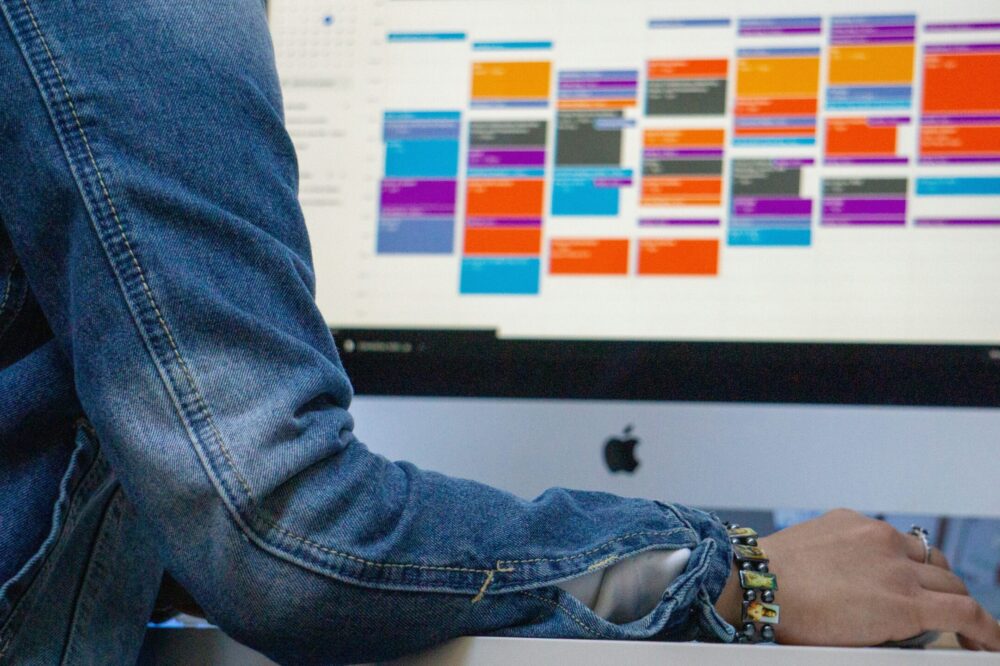
Photo by Gaining Visuals on Unsplash